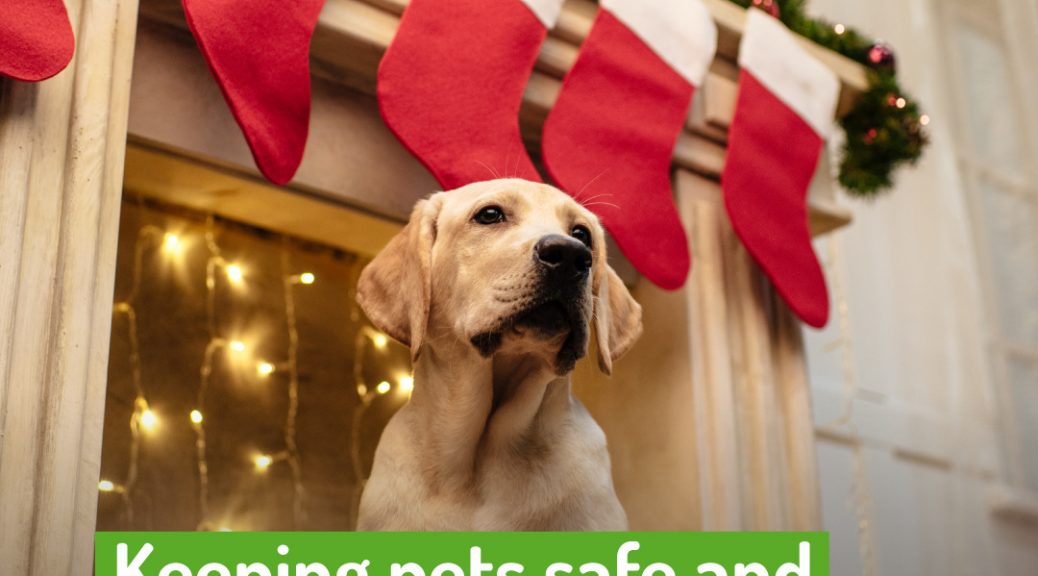

Christmas is a magical time of year with its twinkling lights, cosy nights in, and delicious food. But while we’re tucking into mince pies and watching festive films, our pets are experiencing Christmas very differently. For them, it’s a time of strange visitors, tempting smells, and new hazards around the home.
If you’re a pet owner, a bit of planning can help keep your furry friends safe and relaxed, and Christmas is also a wonderful time to give back to animals in need.
Festive dangers for pets
Christmas foods to avoid
Many classic Christmas foods are dangerous for pets:
- Mince pies, Christmas pudding and fruit cake – These often contain raisins, sultanas and currants, all of which are toxic to dogs and may lead to kidney issues.
- Chocolate – Whether it’s in an advent calendar, selection box, or tree decorations, chocolate is poisonous to dogs and cats.
- Onions, garlic, leeks and chives – Found in gravy, stuffing and many trimmings, these can damage red blood cells and cause anaemia in both dogs and cats.
- Alcohol – Even small amounts of alcohol, including in desserts like trifle, can be very dangerous.
- Cooked bones – Turkey, chicken or goose bones can splinter and cause choking or internal injuries.
Make sure you keep festive foods well out of reach, brief family and guests not to share scraps, and have a pet-safe alternative treat ready so your pets don’t feel left out.
Decorations and Christmas trees
Your Christmas decor can be surprisingly risky:
- Tinsel and ribbon – Cats, in particular, love to chew tinsel and ribbon. If swallowed, these can cause serious intestinal blockages.
- Fairy lights – Chewed wires can cause electric shocks. Keep cables tucked away or protected, especially from curious pups.
- Baubles and ornaments – Glass baubles can shatter and cause cuts; even plastic ones can be a choking hazard if chewed.
- Real Christmas trees – Pine needles can irritate paws and, if swallowed, cause stomach upset or internal damage.
Try to place your tree somewhere you can close off if needed, use shatterproof decorations low down, and never leave pets unsupervised in a room bursting with temptations.
Seasonal plants and candles
A few popular festive plants and products are best avoided or handled with care:
- Poinsettia, holly and mistletoe – These can all cause drooling, vomiting or stomach upset if chewed. Keep them well out of reach.
- Scented candles and wax melts – Always burn them in a safe place and never leave pets alone with a naked flame.
- Essential oil diffusers – Certain oils can be toxic to pets; check before using and ensure good ventilation.
Helping your pet cope with the Christmas chaos
The festive season can be overwhelming, especially for anxious pets:
- Create a quiet, cosy space away from the main action, with their bed, favourite toys, food and fresh water.
- Stick to regular feeding and walk times as much as possible.
- Let guests know your pet’s boundaries, for example, no picking up the cat, no feeding from the table, and giving nervous dogs space.
- If you’re travelling within the UK, make sure your pet is safe and secure in the car, and check they’re welcome at any accommodation beforehand.
How to give back this Christmas
Christmas is a great time to support animals who don’t yet have a loving home of their own. Here are some meaningful ways to give back:
- Volunteer at a local animal shelter
- Donate supplies, such as food, blankets, toys, leads, cat litter or cleaning products
- Organise a fundraising event
- Sponsor a specific animal at a rescue centre
Christmas with pets can be joyful, heart-warming and full of wagging tails and happy purrs, as long as we stay mindful of the hidden hazards. By keeping our own pets safe and comfortable, and doing a little bit extra for pets in need, we can make this festive season truly special for every four-legged friend.